IN THE STATE COURTS OF THE REPUBLIC OF SINGAPORE
District Arrest Case 023145 of 2012 and others
Between
Public Prosecutor
And
(1) Lam Leng Hung
(2) Kong Hee
(3) Tan Shao Yuen Sharon
(4) Chew Eng Han
(5) Tan Ye Peng
(6) Serina Wee Gek Yin
ORAL JUDGMENT
PUBLIC PROSECUTOR
V
LAM LENG HUNG & 5 ORS
State Courts — District Arrest Case 023145 of 2012 and others
Presiding Judge See Kee Oon
21 Oct 2015 Judgment reserved.
Presiding Judge See Kee Oon:
Overview
1 This was a 140-day trial involving 43
charges against the 6 accused persons. They were tried primarily on
charges of conspiring to commit criminal breach of trust (“CBT”) by
dishonestly misappropriating funds belonging to City Harvest Church
(“CHC”) that had been entrusted to one or more of them. There are two
broad groups of charges involving CBT. The first group comprises the
first to third charges and pertains to what have been referred to in the
course of the trial as the “sham bond investments”. The second group
comprises the fourth to sixth charges, pertaining to what has been
termed “round-tripping”. A third group of charges, the seventh to
tenth, concerns falsification of accounts in CHC’s books relating to the
“round-tripping” transactions.
2 I do not propose to set out the evidence
as it is lengthy and voluminous. It suffices to note that the main
background facts are largely undisputed or uncontroversial. I will set
out my findings in relation to the elements of the offence of CBT first,
leaving aside the issue of the mens rea of dishonesty. I will then
focus primarily on the extent of the accused persons’ knowledge and
involvement in the plans to use funds belonging to CHC for the Crossover
Project (“the Crossover”) and on whether their conduct in
the circumstances shows that they had acted with dishonest intent.
Criminal breach of trust – elements
3 In relation to the elements of the
offence of criminal breach of trust by an agent, leaving aside the mens
rea element, I shall state my conclusions briefly. First, I am satisfied
that Kong Hee, Tan Ye Peng (“Ye Peng”) and John Lam Leng Hung (“John
Lam”) were, as members of CHC’s management board, each entrusted with
dominion over CHC’s funds, whether in the Building Fund (“BF”) or the
General Fund. Second, I am bound to hold that they were entrusted with
such dominion in the way of their business as agents because, being
board members, they were so entrusted in their capacities as agents of
CHC. Third, I am satisfied that the various plans to use CHC’s
funds amounted to putting these funds to unauthorised or wrong use.
“Wrong use” of CHC’s funds
4 The BF was a restricted fund that could
be used only for building-related expenses or investments for financial
return. I find that the Xtron and Firna bonds were not genuine
investments but were a wrong use of the BF. I find also that Tranches 10
and 11 of the Special Opportunities Fund (“SOF”) were not genuine
investments but were transactions designed to create the appearance that
the Firna bonds had been redeemed. I find, finally, that the payment
under the Advance Rental Licence Agreement (“ARLA”) was not
abuilding-related expense but was a transaction designed to perpetuate
the appearance that the Firna bonds had been redeemed. They were
therefore all wrong uses of CHC’s funds.
5 I turn next to the accused persons’ involvement and knowledge in the various plans to use CHC’s funds.
Funding the Crossover – being discreet
6 The accused persons understood that Kong
Hee’s preference to be discreet about the funding for the Crossover was
for the sake of ensuring the success of the Crossover, but being
discreet was also synonymous with non-disclosure and mis-statements.
Kong Hee had explained that it was his preference to avoid disclosure of
CHC’s involvement in Xtron to avoid any misconception that Sun Ho’s
secular music career was “not real” and that CHC was (still) using its
money to promote her career. But in relation to both aspects, the
evidence shows that it was true that her perceived success was inflated
from rather more modest levels and Xtron and the Crossover team had to
rely heavily on sponsorship from CHC members or supporters to help
prop up her album sales and promote her career. When these sources of
financial support which did not directly flow from CHC were
insufficient, they had to come up with other means.
Xtron bonds
7 Xtron was CHC’s special purpose vehicle
for the Crossover, and for this purpose Xtron was clearly under CHC’s
control and not independent. The plan formulated in 2007 was that CHC’s
funds, specifically funds from the BF, would be channelled through Xtron
to be used for the Crossover, and the use of the funds was controlled
entirely by Kong Hee and his team. In truth, this was analogous to an
elaborate extension of a pattern of financial assistance via
“sponsorship”, lending or prepayment to Xtron that had already either
been taking place or been contemplated prior to 2007. These were seen as
short-term measures to put Xtron in funds and support the Crossover.
The mindset was thus that the Xtron bond issues were only yet another
“temporary plan” albeit one which involved borrowing from CHC’s BF, and
hoping that the funds would somehow find their way back to CHC at some
unspecified future point.
8 Kong Hee, Ye Peng, Chew Eng Han (“Eng
Han”) and Serina Wee (“Serina”) each clearly played a substantial role
in conceiving and executing this plan to channel CHC’s BF through Xtron
for the Crossover. John Lam’s role was evidently less substantial, but I
am satisfied that he had his own part to play as a board member and
investment committee member. All of them knew that the BF was a
restricted fund to be used only for specific purposes. They claim that
they believed the Xtron bonds were genuine investments. They believed
the Xtron bonds would bring CHC financial return. But on my evaluation
of the evidence I consider that the prosecution has proved beyond
a reasonable doubt that they did not hold that belief.
9 I find that the accused persons were
planning on the basis of Sun Ho’s planned US Crossover album being
realistically capable of generating sales of only 200,000 units, and although their
projections showed that the bonds could not be redeemed by the maturity
date, they were unconcerned since Eng Han assured them that the maturity
date for the bonds could always be extended or fresh bonds could be
issued. I am unconvinced that they could have had a genuine belief in
Sun Ho’s prospects of success for the US Crossover given their
consciousness that much of her earlier success was contrived
and contributed to by CHC itself. Serina readily conceded that Sun Ho’s
Asian Crossover albums all made losses and Xtron had thus incurred
substantial accumulated net losses. Kong Hee, Ye Peng, Eng Han and John
Lam also knew that CHC was involved in propping up her Mandarin album
sales. I am unable to see how there can be any genuine or honest grounds
for their claims that they expected far higher sales for her planned US
album well in excess of the projection of 200,000 units. This was no
more than an optimistic hope. It was definitely not a realistic
expectation. All this strongly militates against their claims that the
Xtron bonds were motivated by the realistic prospect of financial return
and were genuine investments.
10 Further, the accused persons were all
involved in making plans to put Xtron in funds to redeem the bonds. They
knew that these plans would involve CHC paying money to Xtron under the
guise of legitimate transactions, when in fact the real concern was
Xtron’s cashflow difficulties and the purported transactions were mere
excuses for CHC to channel money to Xtron. Thus they knew that there was
a strong possibility that the apparent financial return under the Xtron
bonds would come from CHC itself. This knowledge further undermines
their claim that they believed the Xtron bonds were a
genuine investment.
11 In addition, the accused persons hid or
obscured material information from others. Eng Han and John Lam kept
the truth about the Xtron bonds from Charlie Lay. All of them at various
times gave the auditors the impression that CHC and Xtron were
independent of each other, when they knew that Kong Hee in fact made all
decisions on Xtron’s behalf in relation to the Crossover without
reference to the Xtron directors, who were mere figureheads.
The auditors were not told that Xtron was in fact controlled by Kong Hee
and Ye Peng and that they together with their co-accused would exercise
control over the use of the bond proceeds. There is no doubt that they
knew that they had something to hide.
12 In all the circumstances, I am
satisfied that the accused persons knew that the Xtron bonds were
conceived first and foremost to support the Crossover and not for
financial return. The prospect of any financial return was a secondary
consideration at best and even then I do not accept that they genuinely
believed that the sale of Sun Ho’s music albums would
generate sufficient profit for CHC to enjoy financial return. They knew
that any financial return to CHC might be illusory in the sense that it
was CHC’s own money that might need to be channelled to Xtron to redeem
the bonds. Given their knowledge, I cannot accept their claims that they
believed the Xtron bonds were a genuine investment. Accordingly, they
caused CHC to subscribe to $13 million in Xtron bonds knowing that they
were not legally entitled to do so. Thus they acted dishonestly, and I
find that the first and second charges have been made out against John
Lam, Kong Hee, Eng Han, Ye Peng and Serina.
Firna bonds
13 In respect of the Firna bonds, the
accused persons all knew that the primary purpose of the bonds was also
to channel money from CHC’s BF to the Crossover. Kong Hee, Ye Peng, Eng
Han and Serina knew that they, and not Wahju, were the ones controlling
the Firna bond proceeds and deciding how the proceeds should be applied
towards the Crossover. Yet they took the inaccurate position that Wahju
was somehow “independently” supporting the Crossover using his “personal
monies”, and this was what they told the auditors and lawyers. They
knew that the financial return under the Firna bonds would not come from
the profits of Firna’s glass factory business but depended entirely on
the success of the Crossover. If the revenue from Sun Ho’s albums was
not adequate, they would find alternative sources of funds for Firna,
and that might include channelling CHC’s own money into Firna through
various means. Given this knowledge, I do not think Kong Hee, Eng Han,
Ye Peng and Serina could have believed that the Firna bonds
would generate financial return for CHC, and so they could not have
believed that the bonds were a genuine investment.
14 John Lam was further removed from the
Firna bonds than the other accused persons. But he signed the “secret
letter” that secured the signature of Wahju’s father-in-law on the Firna
BSA. I am satisfied that he knew that the prospect of financial return
for CHC did not depend on the success of Firna’s glass factory business.
He knew that it was a very real possibility that the Crossover would
not be profitable. Thus I find that he too did not believe that the
Firna bonds would generate financial return for CHC, meaning that he
did not think the bonds were a genuine investment.
15 Therefore, in causing CHC to subscribe
to $11 million in Firna bonds, the accused persons knew that they were
not legally entitled to do so. They thus acted dishonestly. As such, I
find that the third charge has been made out against John Lam, Kong Hee,
Eng Han, Ye Peng and Serina.
16 At the centre of the first to third
charges is how the BF came to be applied for the Crossover when it was a
restricted fund for specific purposes – either for building or
investment. In my judgment, the Crossover was not one of these purposes.
It was not an investment since by their own characterisation, it was
meant to serve a “missions” purpose all along. I am not convinced that
there was any “mixed motive”, “dual purpose” or “hybrid” intent behind
the use of the BF. These are creative labels tacked on in an attempt to
strain and stretch the plain meaning of the word “investment”. They were
plainly fabricated in an attempt to justify their past conduct and
misuse of the BF. I do not see how they can be said to have acted in
good faith in relation to the charges they face.
17 The accused persons have of course
pointed to the fact that the money did come back to CHC with interest.
However, this is patently due to their efforts to put Xtron, Firna and
AMAC in funds to facilitate these repayments through the round-tripping
transactions. It does not confirm that there was any actual intention at
the outset to invest for the purpose of maximising returns. What is
more telling is that it was consistently represented to CHC’s Executive
Members that investing the BF in this fashion was meant to maximise
returns. There was no mention at all that the investment was in
the Crossover, let alone that it was for “spiritual returns” or for both
spiritual and financial return from the Crossover. The failure to
mention those facts buttresses my conclusion that the accused persons
knew that they were not legally entitled to cause CHC to enter into the
Xtron and Firna bonds.
Round-tripping and falsification of accounts
18 As revealed by the evidence adduced at
trial, there was never any financial “return” derived from any of
Xtron’s and Firna’s Crossover-related activities. Instead, when the time
came to deal with the auditors’ queries and to address Sim Guan Seng’s
concerns, they resorted to removing more funds from the BF and also the
General Fund under the pretext of making further “investments” into
Tranches 10 and 11 of the SOF and purportedly for a building purchase by
Xtron through the ARLA. The round-tripping transactions were crafted to
create the appearance that these were genuine transactions involving
the redemption of bonds when they were not. They were not genuine
transactions because the accused persons controlled these transactions
every step of the way, and the substance of it was that CHC
was channelling money through various conduits in order to pay itself.
19 Given that Ye Peng, Eng Han, Serina and
Sharon Tan (“Sharon”) were fully aware of the whole series of
transactions, they could not have believed that Tranches 10 and 11 of
the SOF were genuine investments, or that the payment under ARLA was a
building-related expense. They say that they viewed all this as
“restructuring”, but that to my mind is fundamentally inconsistent with a
belief that the transactions were genuine investments
or building-related expenses, and this inability to provide a coherent
explanation for their conduct strongly suggests that they knew they were
not legally entitled to cause CHC to enter into these transactions.
They may have apprised the CHC board of an earlier version of the
transactions, but they kept that knowledge from the lawyers and the
auditors. Taking into account all the circumstances, I am satisfied
beyond reasonable doubt that the fourth to sixth charges have been made
out against them.
20 I am also satisfied that there was
falsification of CHC’s accounts following from the attempts to disguise
the SOF and ARLA transactions as genuine transactions. In relation to
the ninth charge, the accounting entry recording a redemption of Xtron
bonds in the form of a set-off against advance rental was false, because
it was not a case of CHC and Xtron making independent decisions to pay
advance rental on one hand and redeem bonds on the other. I find that
the accused persons knew that false accounting entries would have to be
made pursuant to their plan to create the appearance of redemption of
bonds, and hence I find that they each had intent to defraud. I am
therefore satisfied that the seventh to tenth charges have been made
out against Ye Peng, Eng Han, Serina and Sharon.
Objective evidence and inferences
21 I note that there was an extensive
record which comprised an elaborate patchwork of emails, Blackberry
messages, phone SMSs, hard copy documents and numerous other documented
exchanges in some form or other. The fact that there was a mass of
available evidence which when woven together amounted to a paper trail
is not necessarily indicative of innocence. In my view insofar as much
of it was incriminating, it is more suggestive of a mindset of
presumptuousness or boldness, demonstrating that the accused persons
were overconfident in their belief that they could replace the funds
in time before suspicions were aroused.
22 The case against the accused persons
depended heavily on inferences to be drawn from the objective evidence.
Much of these inferences can be readily drawn as the tenor and language
in the communications adduced at trial strongly point to their dishonest
intent. In short, the documentary evidence goes a long way in
demonstrating their subjectively guilty knowledge. I am not convinced
that they have raised any reasonable doubt in this regard.
23 I find that the accused persons were
variously inextricably entangled in two conspiracies to misuse CHC’s
funds. One conspiracy consisted of misusing BF monies for the Crossover,
and the other involved misusing CHC’s funds, a substantial portion of
which comprised BF monies, to create the appearance of bond redemptions
and to defraud the auditors via falsified accounts through the various
roles they played. Each of them participated and functioned in their own
way as crucial cogs in the machinery. Although there are distinctions
in their respective levels of knowledge and participation, I am unable
to discern any rational basis to exclude any of them from
being implicated and characterised as conspirators.
Beliefs, motives and mindsets
24 Much of the defence centred on the
beliefs and motivations of the accused persons. If it can be shown that
they genuinely, honestly and reasonably held the view that what they
were doing was legitimate in the sense that they were legally entitled
to do it, and they went ahead to act in good faith as a result, I think
there may well be room for doubt as to whether they had acted
dishonestly. The weight of the evidence however points to a finding
that they knew they were acting dishonestly and I am unable to
conclude otherwise.
25 Where professional advice was sought,
this was really mainly an attempt to seek out self-supporting
confirmatory advice based on selectively-disclosed information. They omitted mention of the crucial fact that
CHC remained in control of Xtron and would correspondingly control the
use of the funds. They provided leading questions for belief
confirmation and support from only those advisors whom they trusted to
support the Crossover vision and were quick to reject or filter out any
disconfirming information.
26 The accused persons chose to support
the Crossover vision and to act and participate in acts in support of
it. The Crossover became a comprehensive logic for justifying their
beliefs and actions, and for doing whatever was expedient for its
advancement. The pervasive mindset seemed to be one of short-term
expediency; the use of means involving dubious methods was worth the
risk to them if there was some hope of longer-term gain.
Conclusion
27 In their defence, all the accused
persons testified largely to the same effect: they love CHC and would
not have wished to do harm to CHC. They never intended to cause loss to
CHC. They consulted and cleared their proposals with their lawyers, the
auditors and the CHC Board. They were motivated by CHC’s cultural
mandate and they believed in the Crossover vision. They pointed to pure
motives and a justifiable purpose in the use of CHC’s funds. Ultimately
the funds which were removed were for Church purposes and were returned
to CHC.
28 The crux of their defence was that
there was no conspiracy and no dishonesty. All six would never intend to
cause harm or loss to CHC and the ultimate objectives were in
furtherance of the Great Commission. It may be arguable that all of them
thought they were not acting dishonestly to cause wrongful loss since
no permanent loss was intended, but this was premised on their
unquestioning trust and belief in Kong Hee and their confidence that
the Crossover would succeed. Thus they convinced themselves that it was
both morally and legally permissible to temporarily use the money from
CHC’s funds when they knew it was not.
29 The accused persons chose to engage in
covert operations and conspiratorial cover-ups. They contrived to create
cover stories and clever round-trips concealing their unlawful conduct.
They chose to participate in the conspiracy to misuse CHC’s funds,
which included siphoning off large amounts from the BF for Sun Ho’s
music career and eventually for the round-tripping transactions to
enable the bond redemptions. They chose to defraud the auditors with
falsified accounts suggesting a series of genuine transactions for the
redemption of bonds and advance rental. The evidence
points overwhelmingly to a finding that they had all acted dishonestly
and in breach of the trust reposed in them and they played their
respective roles in a conspiracy with intent to cause wrongful loss to
CHC and to defraud the auditors.
30 I am therefore satisfied beyond a
reasonable doubt that the six accused persons are guilty of all the
charges that have been brought against them. I note that all of them
believed that they had acted in what they considered to be the best
interests of CHC. There is no evidence of any wrongful gain – that was
never the prosecution’s case in any event as the charges were premised
on wrongful loss caused to CHC through the misappropriation of CHC’s
funds.
31 I consider that John Lam, Eng Han,
Serina and Sharon were all acting in accordance with the instructions of
people they considered to be their spiritual leaders deserving of their
trust and deference, and Ye Peng, although a leader in his own right,
similarly trusted completely the leadership of Kong Hee. But no matter
how pure the motive or how ingrained the trust in one’s leaders,
regardless of the context in which that trust operates, these do
not exonerate an accused person from criminal liability if all the
elements of an offence are made out. In my judgment all the elements of
the relevant offences have indeed been made out. Accordingly, the
accused persons stand convicted as follows:
(a) John Lam is convicted on the first to third charges;
(b) Kong Hee is convicted on the first to third charges;
(c) Sharon is convicted on the fourth to tenth charges;
(d) Eng Han is convicted on the first to tenth charges;
(e) Ye Peng is convicted on the first to tenth charges; and
(f) Serina is convicted on the first to tenth charges.
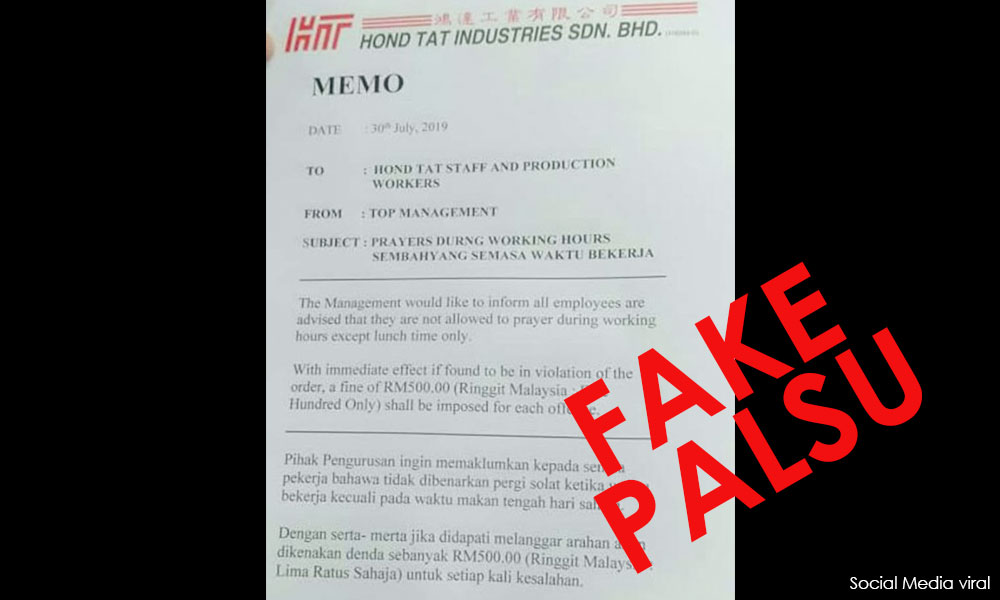
 (2) Prayer time is one of such
privileges. It is not a statutory
right. This is what the employer, HR
PROFESSIONAL and the employees must all understand. A privilege granted gains appreciation and
goodwill. A right that is granted does not
gain any appreciation at all, because there are enshrined penalties for failing
to grant rights. Granting a privilege
as if it is a statutory right is an act of ignorance; the good action is
taken for granted as a right and nobody shows appreciation fornit.
(2) Prayer time is one of such
privileges. It is not a statutory
right. This is what the employer, HR
PROFESSIONAL and the employees must all understand. A privilege granted gains appreciation and
goodwill. A right that is granted does not
gain any appreciation at all, because there are enshrined penalties for failing
to grant rights. Granting a privilege
as if it is a statutory right is an act of ignorance; the good action is
taken for granted as a right and nobody shows appreciation fornit.